
Miami Personal Injury Lawyer | Pedestrian Deaths, Tourist Traffic, and a Deadly Road Network
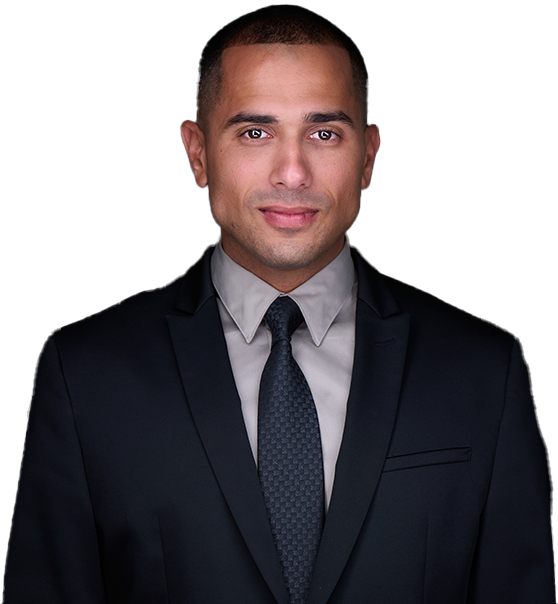
Last reviewed by Attorney Dean Levy on April 20, 2026. This page is reviewed quarterly to reflect current Florida personal injury law.
TL;DR
- Miami-Dade recorded over 60,000 crashes and 300 deaths in 2024.
- Miami ranks among America’s most dangerous cities for pedestrians.
- Miami-Dade cases venue in the Eleventh Judicial Circuit Court.
- Florida’s injury filing deadline is 2 years from the crash date.
- Tourist and rental-car drivers raise unique recovery questions.
Miami is the core of the nation’s sixth-largest metropolitan area, and its road network reflects that density. Miami-Dade County recorded more than 60,000 crashes and about 300 traffic deaths in 2024, and the City of Miami ranks among the most dangerous places in America to walk. This firm handles Miami personal injury cases with attention to the factors that make them distinct: a documented pedestrian-fatality crisis, heavy tourist and rental-car traffic, a notoriously hazardous highway system, and the Miami-Dade court and venue rules that differ from Broward County. Dean Levy serves Miami-Dade clients from the firm’s South Florida office.
Why is Miami so dangerous for pedestrians?
Miami ranks among the ten most dangerous US cities for pedestrians, with roughly 33 pedestrian-involved crashes per 100,000 residents according to a 2025 study of tourist-destination cities.[1] Wide, high-speed arterials designed to move vehicles quickly cut through dense neighborhoods where people walk.
State Road 9 (NW 27th Avenue), connecting the Golden Glades Interchange to Coconut Grove, was named one of the four deadliest roads in the nation for pedestrians by a 2025 Washington Post analysis. Contributing factors include roads built for speed rather than pedestrian safety, inadequate crossings and lighting, and a mix of resident and tourist foot traffic. Pedestrian cases require sight-line analysis, accident reconstruction, and prompt evidence preservation because injuries are typically severe and liability is heavily contested.
What are the most dangerous roads and intersections in Miami?
Miami-Dade’s crash density concentrates on the interstate system, the SR-826 Palmetto Expressway, SR-836 Dolphin Expressway, US-1, and the Golden Glades Interchange, one of the most complex junctions in the country.
| Location | Hazard | Common Crash Types |
|---|---|---|
| I-95 through Miami | One of Florida’s deadliest highway stretches | Rear-end, sideswipe, multi-vehicle |
| SR-836 (Dolphin Expressway) | High speeds, complex interchanges | Single-vehicle, rollover, rear-end |
| Golden Glades Interchange | Junction of 5 major routes | Merging, sideswipe, pileup |
| SR-9 / NW 27th Avenue | Ranked among nation’s deadliest for pedestrians | Pedestrian, rear-end |
| Brickell Avenue drawbridge | Backed-up traffic, driver aggression | Rear-end, pedestrian |
| US-1 (South Dixie Highway) | Speeding, railroad crossings | Pedestrian, T-bone, rear-end |
What happens if a tourist or rental-car driver caused my Miami crash?
Miami’s status as a global tourist destination brings millions of unfamiliar drivers onto its roads each year. Winter and spring months show measurable crash increases correlating with visitor numbers. When a tourist or rental-car driver causes a crash, recovery sources differ from a standard resident-driver case.
Rental-car policies issued in Florida are generally Florida-compliant regardless of where the renter lives. The renter’s personal auto policy, credit-card supplemental coverage, and travel insurance may also apply. The procedural challenge is service of process and discovery once the tourist returns home. Florida’s long-arm statute under Florida Statute 48.193 allows jurisdiction over non-resident defendants who cause crashes in Florida. Prompt investigation and evidence preservation matter because a visitor’s window of accessibility can close within days.
Where do Miami injury lawsuits get filed?
Personal injury cases arising in the City of Miami and Miami-Dade County are filed in the Eleventh Judicial Circuit Court of Florida, which sits at the Miami-Dade County Courthouse and the Lawson E. Thomas Courthouse Center. This is a different court system from Broward County’s Seventeenth Judicial Circuit.
Venue generally lies where the crash occurred or where the defendant resides. For a Miami crash, that means Miami-Dade County. The distinction matters because each circuit has its own judges, jury pool, and local procedures. Miami-Dade juries and case dynamics differ from Broward’s, which experienced counsel accounts for when evaluating a case and preparing for trial. Dean Levy handles Miami-Dade cases and appears in the Eleventh Circuit while operating from the firm’s Fort Lauderdale office.
How did Florida’s 2023 tort reform change Miami injury cases?
Florida House Bill 837, effective March 24, 2023, made two changes that affect every Miami case. First, it shortened the statute of limitations for negligence claims from four years to two years under Florida Statute 95.11. Crashes on or after that date must be filed within two years.
Second, it replaced Florida’s pure comparative negligence system with a modified system under Florida Statute 768.81. A plaintiff found more than 50% at fault now recovers nothing. Recovery is still reduced by the plaintiff’s fault percentage up to that threshold. For Miami’s contested pedestrian and multi-vehicle cases, this makes strong liability evidence more important than ever, since a fault finding above 50% ends the claim entirely.
What is Florida’s 14-day rule and how does it apply in Miami?
Florida requires accident victims to seek medical treatment within 14 days of a motor vehicle crash to preserve $10,000 in Personal Injury Protection (PIP) benefits under Florida Statute 627.736. Miss the window and the PIP allotment is forfeit.
Qualifying Miami providers include Jackson Memorial Hospital (the Ryder Trauma Center is the region’s premier trauma facility), the University of Miami Hospital, urgent care centers, and primary care physicians throughout the city. The visit must document accident-related injuries. Tourists injured in Miami should obtain treatment before leaving Florida, as the 14-day window applies regardless of where they live.
What types of injury cases does the firm handle in Miami?
Miami’s density and diversity produce a broad range of personal injury matters. The firm handles the full spectrum of negligence cases across the City of Miami and surrounding Miami-Dade communities.
| Case Type | Common Miami Scenarios | Key Florida Law |
|---|---|---|
| Car accidents | I-95, SR-836, US-1, surface arterials | F.S. 627.736; F.S. 768.81 |
| Pedestrian strikes | SR-9, downtown, tourist corridors | F.S. 316.130 |
| Rideshare accidents | Uber/Lyft in dense urban traffic | F.S. 627.748 |
| Tourist and rental-car crashes | Airport corridors, tourist zones | F.S. 48.193 (long-arm) |
| Bicycle accidents | Urban cycling, 3-foot passing law | F.S. 316.083 |
| Slip and fall | Hotels, retail, restaurants | F.S. 768.0755 |
How does rideshare insurance work after a Miami Uber or Lyft crash?
Rideshare crashes in Miami are governed by Florida Statute 627.748, which requires transportation network companies to carry coverage that varies by the driver’s app status at the time of the crash.
When the driver is en route to or carrying a passenger, the company’s $1 million liability coverage typically applies. When logged in but waiting for a request, lower coverage applies. When offline, only the driver’s personal policy applies. Determining the driver’s app status at the moment of the crash is essential, and that information comes from the rideshare company’s records, which must be requested promptly before data-retention periods expire.
What does a Miami personal injury lawyer cost?
Dean Levy Injury Law works on a contingency-fee basis under Florida Bar Rule 4-1.5(f): 33.3% before suit and 40% after suit is filed. There is no upfront cost and no fee unless we recover compensation. All case expenses are advanced by the firm and recovered only from the settlement or verdict.
Dean Levy personally handles every Miami case from intake through resolution. There is no intake call center and no associate hand-off. Dean serves Miami-Dade clients from the firm’s South Florida office and has been admitted to the Florida Bar since November 13, 2018.
Injured in Miami? Talk to the attorney directly.
(888) 613-3326 — Free ConsultationNo fees unless we win. Attorney Levy personally handles every case.
Frequently Asked Questions
Two years from the crash date for negligence claims arising on or after March 24, 2023, under Florida Statute 95.11. Florida shortened this deadline from four years through House Bill 837. Missing the deadline generally bars recovery entirely, so prompt action protects the claim.
The Eleventh Judicial Circuit Court of Florida handles cases arising in the City of Miami and Miami-Dade County. This differs from Broward County’s Seventeenth Circuit. Venue generally lies where the crash occurred or where the defendant resides. Each circuit has its own judges and jury pool.
Rental policies issued in Florida are generally Florida-compliant. The renter’s personal policy and credit-card coverage may also apply. Florida’s long-arm statute allows jurisdiction over non-resident defendants. Prompt investigation matters because a visitor’s window of accessibility can close within days.
Yes. Miami ranks among the ten most dangerous US cities for pedestrians, with roughly 33 pedestrian crashes per 100,000 residents in a 2025 study. State Road 9 was named one of the four deadliest US roads for pedestrians. Wide, high-speed arterials through dense areas drive the risk.
Dean Levy serves Miami-Dade clients from the firm’s South Florida office at 955 South Federal Highway in Fort Lauderdale. The firm handles cases throughout Miami-Dade County and appears in the Eleventh Judicial Circuit Court. Consultations are available by phone and in person.
I-95 through Miami consistently ranks among Florida’s deadliest highway stretches. SR-836 (Dolphin Expressway) and the Golden Glades Interchange, where five major routes converge, also produce frequent serious crashes. High speeds and complex interchanges contribute to the severity of collisions on these routes.
Dean Levy Injury Law works on contingency under Florida Bar Rule 4-1.5(f): 33.3% before suit and 40% after suit is filed. No upfront cost. No fees unless we recover compensation. All case expenses are advanced by the firm.
Related Topics
- Fort Lauderdale personal injury lawyer (South Florida practice area hub)
- Pedestrian accident cases (Florida’s pedestrian fatality crisis)
- Uber and Lyft accident cases (rideshare insurance coverage)
- Florida’s 14-day rule (protect PIP benefits after a crash)
Dean Levy Injury Law | 955 South Federal Hwy, Suite 416, Fort Lauderdale, FL 33316 | (888) 613-3326